
Mastering Punching Machine Game Mechanics To Get High Scores
Getting a high score on a punching arcade machine isn’t just about brute strength. Players often believe force alone determines their score, but the reality is far more intricate. For operators of Commercial Entertainment Centers (FECs) and arcades, understanding scoring mechanics is essential for ensuring fair play, engaging experiences, and repeat visits.
Punching machine game mechanics are shaped by impact angle, contact precision, and sensor responsiveness—not sheer force alone. Operators should prioritize model calibration, scoring consistency, and replay incentives to ensure player satisfaction and promote arcade machine profitability.
Punching games attract players with their simple premise and competitive appeal, but the scoring setup is central to the game’s success. Let’s explore how operators can master the mechanics to deliver high scores that keep customers coming back.
What factors influence punching machine scores?
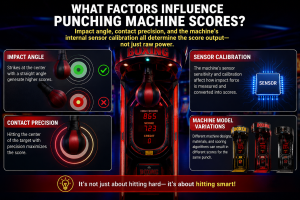
Punching machines may appear straightforward, but their scoring systems depend on multiple factors beyond force.
Impact angle, contact precision, and the machine’s internal sensor calibration all determine the score output—not just raw power.
Dive deeper into scoring mechanics
At ELONG Amusement, our experience in manufacturing arcade punching machines reveals that key factors influence scoring behavior:
1. Impact point precision
Punching machines calculate scores based on how precisely the strike lands on the target. A centered hit often yields higher scores than a glancing blow. This is because force is more evenly distributed and absorbed by the machine’s sensors.
2. Striking angle matters
When punches land at an angle, energy dispersion skews the score output. Clean, straight punches are more likely to register accurately than strikes that approach from diagonal or lateral directions.
3. Sensor calibration and sensitivity
Punching machines use pressure sensors to measure the impact force. Sensor sensitivity, calibration levels, and responsiveness influence how the machine interprets the strike. Machines calibrated for higher sensitivity might display a greater range of scores, while less sensitive units might under-report.
4. Machine model variations
Not all punching machines are built identically. Differences in internal mechanics, materials used, and scoring algorithms mean that identical punches can result in vastly different scores across brands or models. For operators, consistency across machines is vital to ensuring fair player challenges and competitions.
Why do scoring mechanics affect player experience and engagement?
Understanding how scores are calculated is not just a matter of physics; it’s a direct driver of player satisfaction and arcade profitability.
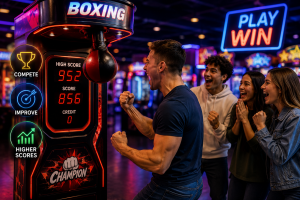
Players are drawn to machines that feel fair and competitive, where scores reflect their skill and effort—not arbitrary or random numbers.
Dive deeper into player psychology and arcade engagement
When players feel confident that their strikes are being fairly assessed, they develop trust in the game and the venue—encouraging competition, repeat participation, and word-of-mouth marketing.
1. Replay value and perceived fairness
- If players sense that scores are unpredictable or unrelated to their performance, they will be discouraged from trying again.
- Balanced scoring with a clear ability-based progression keeps players invested and chasing improvement.
2. Competition multiplies engagement
- Well-calibrated scoring systems allow friendly competitions, where players aim to outperform each other or achieve set high scores.
- Visible leaderboards, rewards for top scorers, and tournaments can dramatically enhance player engagement.
3. Spectator entertainment
- Spectators are drawn to games where visible scoring makes it easy to follow the action. Watching someone achieve a high score can inspire others to give it a try.
4. Initial impressions matter
- Players might judge a punching machine’s fairness by their first few scores. A score that feels “off” compared to effort expended can prompt customers to question the machine’s reliability, potentially deterring repeat play.
How can FEC operators choose the right punching machine?
Selecting the right punching machine goes beyond aesthetics and striking padding durability.
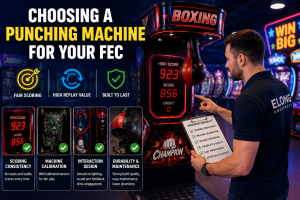
Operators should evaluate scoring consistency, machine calibration, interaction design, and long-term maintenance reliability before making a purchase.
Dive deeper into arcade operator considerations
Operators must balance customer experience with profitability. A poorly tuned punching machine can not only frustrate players but also negatively impact the venue’s reputation. Here are key considerations:
1. Scoring calibration is key
Rarely do buyers test scoring accuracy when evaluating punching machines before purchase. Yet calibration can determine how realistic and enjoyable the game feels to players.
- Before purchasing, ensure the machine undergoes proper tuning for sensor sensitivity, strike recognition, and point distribution.
- Request factory settings to ensure outcomes reflect consistent scoring.
2. Design for interaction value
A punching arcade game should feel like a skill-based challenge rather than luck-driven entertainment. Choose machines with:
- Clear, understandable scoring mechanisms displayed on the screen, where players can track results easily.
- Feedback designs (sound effects, animations) that match the scoring output. A lack of synchronization can harm perceived fairness.
3. Long-term reliability
Punching machines are high-impact equipment, often subject to heavy use. Selecting a sturdy model with durable materials minimizes the risk of long-term degradation. Confirm the availability of:
- Easily replaceable parts, such as punching pads and sensors.
- Maintenance instructions that help operators calibrate the machine for consistent functionality.
4. Engagement features
Instead of focusing purely on advertised high-score numbers, consider features such as multiplayer modes, challenge rankings, or tournament settings that encourage rivalry among players.
Price and profit balance
While price often drives purchasing decisions, lower-cost machines may sacrifice calibration sophistication, long-term reliability, or effective scoring appeal. Factor in the machine’s ability to support profitable play patterns rather than seeking the cheapest acquisition cost.
Frequently Asked Questions
Why do punching machine scores vary across different models?
Scores depend on factors like sensor types, calibration settings, and design variations unique to each machine model. Manufacturers optimize machines differently—some prioritize high sensitivity, while others prefer durability over fine-tuned sensors.
Does punching harder guarantee the highest scores?
Not entirely. While force plays a significant role, punch precision, angle, and striking consistency are equally important. Machines interpret these factors to calculate scores.
How can operators improve scoring fairness?
Regular calibration, tuning sensor systems, and ensuring strike detection accuracy help improve perceived fairness. Operators should work with manufacturers for settings that balance challenge and reward.
Are inexpensive punching machines worth it?
Inexpensive machines might cost less initially but could lack tuning precision, long-term reliability, or engaging features. Focus on equipment that supports player engagement and stable scoring for better ROI.
Can punching machines be customized for different venues?
Yes, many manufacturers, including ELONG Amusement, offer custom configuration options for sensor sensitivity, scoring thresholds, and aesthetic designs tailored to specific venue needs.
Conclusion
Punching machine game mechanics go beyond raw force—scoring depends on factors like impact precision, strike angle, sensor response, and model calibration. For arcade operators and FEC managers, correctly tuned machines with fair scoring systems not only enhance player satisfaction but also build replay value and foster engagement through competition.
When selecting punching machines, focus on scoring stability, reliable operation, and interactive gameplay features over aesthetics or price alone. At ELONG Amusement, we build punching machines designed for fair-play challenges, longer lifespans, and high replay appeal—ensuring not just fun but sustained profitability for your entertainment venue.
Explore our range of arcade punching machines and contact us for tailored solutions to elevate your venue’s gaming experience.